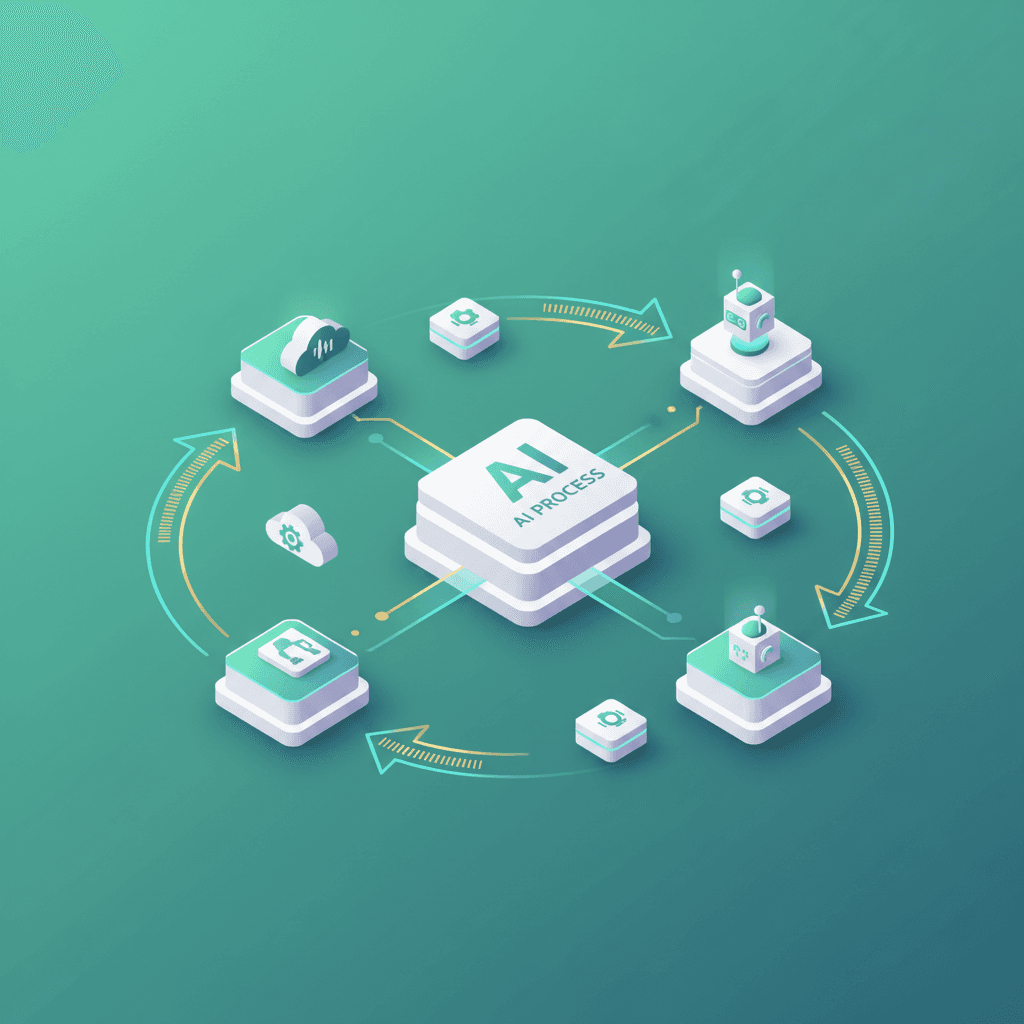
Every month I sit down for about an hour, and by the time I stand up, I have a complete content calendar for 30 days across eight platforms. Scripts, captions, topics, posting schedules — all of it. My AI agent does 90% of the work.
I used to spend an entire day on this. Sometimes I would procrastinate for a week, posting whatever came to mind each morning. The results were inconsistent, the quality was uneven, and I constantly felt behind.
This guide walks you through the exact process I use to plan and execute a full month of content with AI agents doing the heavy lifting.
Why You Need a Content Calendar (Even With AI)
Some people think AI agents eliminate the need for planning. Just generate content on the fly, right? Wrong. Here is why the calendar still matters:
- Strategic coherence. Without a plan, your content is random. A calendar ensures your posts build on each other, support your goals, and hit the right mix of topics.
- Batch efficiency. Creating 30 pieces of content in one sitting is exponentially faster than creating one per day. Your AI agent works faster with batch instructions too.
- Consistency. The algorithm on every platform rewards consistent posting. A calendar makes consistency automatic instead of aspirational.
- Mental peace. Knowing what you are posting for the next 30 days removes a massive cognitive burden. You wake up and execute instead of brainstorm.
The 1-Hour Content Calendar Process
Step 1: Define Your Content Pillars (5 minutes)
Every brand needs 3-5 content pillars — recurring categories that your content rotates between. Mine are:
- Educational: Tutorials, how-tos, explainers
- Behind the scenes: My process, tools, setup, real numbers
- Industry news: AI updates, new tools, trend analysis
- Social proof: Results, case studies, testimonials
- Engagement: Questions, polls, opinions, debates
If you have not defined your pillars yet, do that first. They are the skeleton your calendar hangs on.
Step 2: Generate Topic Ideas (15 minutes)
This is where the AI agent earns its keep. I give my agent a prompt that includes:
- My content pillars
- My target audience
- What performed well last month
- Any upcoming events, launches, or trends
- The platforms I post on
The agent returns 50-60 topic ideas organized by pillar. I scan through them, pick the best 30 (one per day), and make sure the mix feels balanced. Some days are educational, some are engagement-focused, some are news — no two days in a row should be the same pillar.
Step 3: Assign Topics to Days (10 minutes)
I use a simple spreadsheet structure:
| Day | Pillar | Topic | Platforms | Format | Status |
|---|
| Apr 1 | Educational | How to set up your first AI agent | TikTok, YT Shorts, IG | Short video | Draft |
| Apr 2 | Behind the scenes | My morning AI agent routine | X, LinkedIn, Threads | Text post | Draft |
| Apr 3 | News | New Claude features released | All platforms | Mixed | Draft |
| Apr 4 | Engagement | Poll: which AI tool do you use most? | X, IG Stories | Poll/Story | Draft |
| Apr 5 | Social proof | Client saved 10 hrs/week with AI | LinkedIn, FB, Threads | Text + image | Draft |
I also mark which days are for "evergreen" content (reusable) versus "timely" content (news, trends). Aim for 70% evergreen and 30% timely. This ratio means most of your calendar survives even if you need to swap out a few timely posts.
Step 4: Generate Content Drafts (25 minutes)
Now I hand the entire calendar to my AI agent and say: generate drafts for all 30 days, adapted for each platform specified.
This is the magic step. The agent takes each topic and creates platform-specific content for it. A single topic might become a TikTok script, an X thread, an Instagram caption, and a LinkedIn post — each formatted and toned appropriately for its platform.
I wrote about how this platform adaptation works in my social media automation guide. The key is giving the agent clear templates for each platform so it knows the format, length, and tone expectations.
Step 5: Review and Refine (5 minutes per day ongoing)
I do not try to review all 30 days of content in one sitting. Instead, I spend 5 minutes each morning reviewing that day's content. I look for:
- Does the hook work? (If not, I rewrite it manually — hooks are the one thing I always touch)
- Does it sound like me? (AI sometimes slips into a generic voice — I add personal touches)
- Is the CTA appropriate? (Different platforms need different calls to action)
- Any factual claims I need to verify? (Especially for news content)
Five minutes per day is 2.5 hours per month. Compare that to the 20-30 hours most creators spend on content creation monthly.
Templates That Make This Work
The quality of your AI-generated content depends entirely on the quality of your templates. Here are the template structures I use for each platform:
Short Video Script Template
Line 1: Hook (first 2 seconds — visual + text overlay)
Line 2-3: Setup (establish the problem or curiosity gap)
Line 4-6: Meat (the actual value, tips, or information)
Line 7: CTA (follow, comment, save, or link in bio)
Line 1: Bold claim or surprising stat (the hook)
Line 2: One sentence of context
Line 3: The point or insight
Optional: Link or thread indicator
LinkedIn Post Template
Opening: Personal story or observation (2-3 sentences)
Body: The insight or lesson with supporting evidence
Bullets: 3-5 actionable takeaways
Close: Question or invitation to discuss
Note: Link goes in first comment, not in the post
How to Handle Content That Needs Recording
Not everything can be purely AI-generated. Video content for TikTok and YouTube needs recording. Here is how I handle that:
- Batch recording days. I record all video content for the week in one session. My AI agent generates the scripts, I print them out, and I knock out 5-7 videos in 2-3 hours.
- AI video for some content. For certain brand pages, I use AI video generation (Veo3, Kling) with ElevenLabs for voiceover. This lets me produce video content without recording anything.
- Repurpose long-form. My YouTube long-form videos get chopped into 3-5 Shorts by my editor. Those Shorts go on TikTok and Instagram too. One recording, five pieces of content.
Measuring What Works
At the end of each month, I review performance before planning the next month. My agent pulls basic metrics:
| Metric | Why It Matters | What Good Looks Like |
|---|
| Engagement rate | Shows content resonance | Above platform average |
| Reach/Impressions | Shows distribution | Growing month over month |
| Click-throughs | Shows conversion intent | Depends on CTA |
| Follower growth | Shows compounding value | Positive trend |
| Best performing posts | Shows what to repeat | Identify patterns |
The most important output is not the numbers themselves — it is the patterns. Which pillars performed best? Which formats got the most engagement? Which hooks drove the most clicks? Feed those insights into next month's calendar and your content quality compounds over time.
Scaling: From 1 Brand to Multiple
Once you have this process working for one brand, scaling to multiple brands is surprisingly easy. I currently run content for five different brand pages using this same framework. Each brand has its own:
- Content pillars
- Platform templates
- Voice and tone guidelines
- Content calendar
The workflow is identical — just repeated for each brand. My AI agent platform handles the context switching, keeping each brand's voice and strategy completely separate. What took me a full day per brand now takes about an hour per brand per month.
The Biggest Mistake Creators Make With Content Calendars
Planning is not posting. I have met creators who spend hours building beautiful content calendars in Notion with color-coded categories and carefully planned themes — and then do not execute.
The calendar is a tool, not the goal. If your calendar is so complex that maintaining it takes significant effort, simplify it. A basic spreadsheet with date, topic, and platform that you actually follow beats a gorgeous Notion board that you abandon by week two.
My calendar lives in a simple text file that my AI agent reads and writes. No fancy tools. No templates with 15 columns. Date, topic, platform, status. That is it.
Frequently Asked Questions
How far ahead should I plan content?
30 days is the sweet spot. Less than that and you are always scrambling. More than that and the content gets stale — especially in fast-moving spaces like AI where news from two months ago is ancient. Plan 30 days, leave 5-7 flexible slots for timely content.
What if something newsworthy happens mid-month?
Swap out one of your evergreen posts. This is why the 70/30 evergreen-to-timely ratio matters. You always have content that can be moved to a later date without losing relevance, freeing up a slot for breaking news.
How do I maintain my voice when AI generates the content?
Two things: strong templates that encode your voice, and a consistent 5-minute review where you inject personal touches. The template sets the baseline. Your review adds the authenticity. Over time, you can train your AI agent to match your voice more closely by showing it examples of your best-performing content.
Does this work for businesses that are not content-focused?
Yes. Even a local plumber benefits from consistent social media presence. The content pillars would be different (tips, before/after, customer stories, seasonal reminders, Q&A), but the calendar structure is identical. AI agents make this viable even for businesses with zero marketing team.
Want the exact templates and prompts I use for my content calendar? Join our free community where I share them along with monthly content calendar workshops.